Driving Eastern Cougar Recovery Through Active Research
Eastern cougar recovery depends on patient fieldwork, clear public records, and legal advocacy that can survive scrutiny.
Coordinating Science and Legal Advocacy
Cougar recovery in eastern North America is not moved forward by one dramatic sighting or one courtroom filing.
It takes the less glamorous work: checking reports, comparing field evidence, maintaining public education, and keeping legal pressure tied to what the landscape can actually support. That is the practical role of the Eastern Cougar Foundation, described on its About the Cougar Rewilding Foundation page as a group that coordinates field research and legal advocacy to facilitate cougar recovery in eastern North America.
On the ground, the two sides of that mission are inseparable. A legal argument without field discipline becomes wishful thinking. Field reports without an advocacy path can sit in folders for years while habitat decisions move on without them.
That matters in a region where cougar stories carry weight. A farmer sees a long-tailed animal cross a back road at dusk. A hiker finds a track in mud. A trail camera captures a blurred frame that looks convincing until scale, gait, and surrounding vegetation are examined. Each report deserves respect, but respect is not the same thing as confirmation.
ECF’s contribution is to keep those reports connected to a broader recovery question: what would it take for cougars to return, persist, and be treated as part of eastern woodland ecosystems rather than as curiosities?
That is why the foundation’s work belongs at the intersection of Field Research & DNA, public education, and Rewilding Advocacy. Science supplies the test. Advocacy keeps the test relevant when agencies, landowners, and communities make decisions about habitat, wildlife corridors, and public tolerance.
A useful recovery campaign does not ask people to believe. It asks them to look carefully.
Transparent Funding for Remote Camera Surveys
The foundation’s funding model is deliberately modest: annual membership is listed at $15, with a $5 student rate, and those dues support remote camera surveys and newsletters.
That kind of budget tells a story. Remote camera work does not require marble offices, but it does require batteries, memory cards, site visits, careful placement, and people willing to return to the same ridge or drainage after the easy enthusiasm has worn off. The newsletter side matters too, because recovery work dies when supporters only hear from an organization during a fundraising push.
Here is the resource challenge in plain terms: eastern landscapes are large, cougar evidence is rare, and false certainty is cheap.
The creative answer is not to promise constant results. It is to build a survey culture that can be repeated. Place cameras where travel routes make ecological sense. Keep records of when and where they were deployed. Review images with patience. Share enough with members that they understand both the excitement and the limits of the work.
This is not a claim that every photograph, track, or field report points to a resident eastern cougar. For this topic, the method matters because misidentification can damage public trust faster than silence.
What membership supports
Small annual dues help keep field tools in use, support remote camera surveys, and maintain communication with people following cougar recovery work across eastern North America.
Why transparency matters
Members should be able to see how practical field expenses connect to the larger mission, rather than being asked to fund an abstract promise of recovery.
The replication potential is real. A camera survey built on clear placement notes and conservative interpretation can be used by local volunteers, cooperating naturalists, and regional advocates without turning every ambiguous image into a headline. That restraint is not a lack of passion. It is the reason the work can last.
The Researchers Behind the Recovery
Recovery work is often described through agencies, maps, and species status, but the durable part is human: the person who answers a sighting report without mocking it, the researcher who labels an uncertain image as uncertain, the board member who keeps a newsletter factual when supporters want a victory lap.
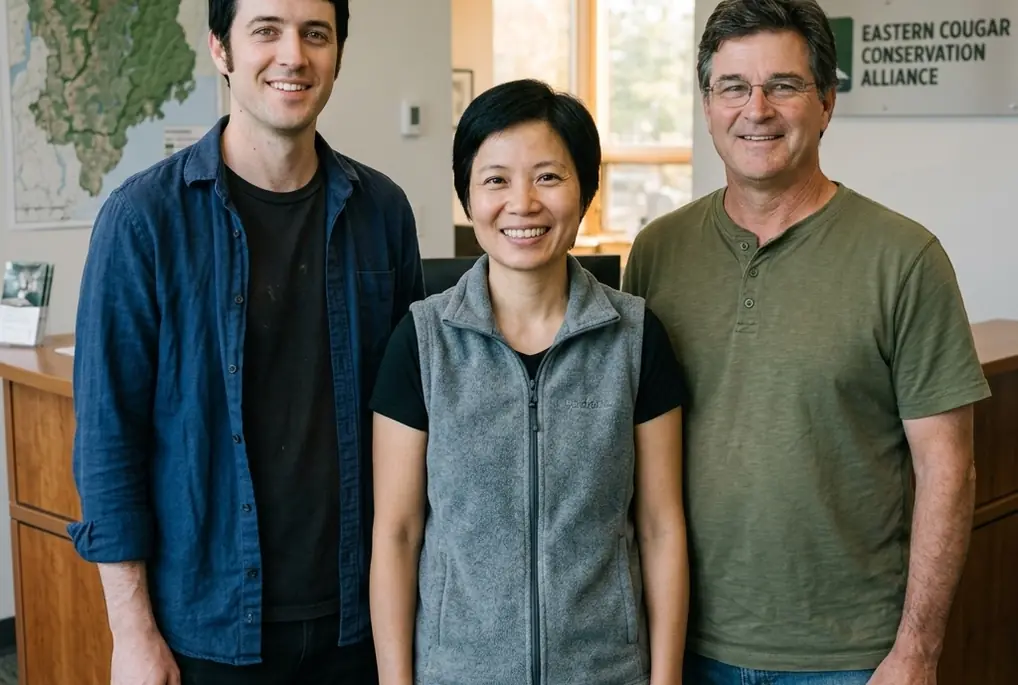
The foundation’s public team presence, including its Our Researchers & Board page, gives readers a way to connect the mission to named people rather than a faceless cause. That distinction matters. Large carnivore recovery asks communities to think about risk, responsibility, and coexistence. People are more likely to engage when they can see who is doing the work and how that work is framed.
The best researchers in this field tend to carry two traits at once. They are skeptical in the field and stubborn about the future. They know a bobcat can fool the eye in poor light. They also know eastern forests once held large predators, and that recovery cannot begin if every conversation is treated as fantasy.
That tension is healthy. It keeps advocacy from drifting away from evidence, and it keeps research from becoming a filing system for decline.
For readers who want to help, the next step is simple: join the foundation, read its field updates closely, and support the remote camera work that turns scattered cougar claims into evidence that can be examined.