
In this Article
- Defining Apex Predator Rewilding and the Eastern Cougar
- Historical Baselines: From Extirpation to Protection
- Biological Monitoring and Field Evidence
- Resource Allocation and Conservation Outcomes
- Strategic Recommendation for Habitat Restoration
Defining Apex Predator Rewilding and the Eastern Cougar
I start every cougar restoration discussion by stripping away the poster-animal language. Apex predator rewilding is the intentional restoration of top-tier carnivores to parts of their pre-colonial range so those animals can regulate prey populations and help restore ecological balance.
That definition matters because it sets the management test. The question is not whether a cougar looks wild enough for a campaign image. The question is whether the landscape can support a wide-ranging carnivore that hunts, disperses, breeds, avoids people when possible, and influences the behavior and density of prey.
Start with the animal, then narrow the geography
Puma concolor is the broad scientific classification used for cougars, pumas, mountain lions, and panthers across the Americas. The common names shift by region, but the ecological role stays recognizable: a stealthy, solitary carnivore built to take large prey and move across large territories.
For eastern North American rewilding, the names need more care. The historically relevant form is Puma concolor couguar, the Eastern cougar. In the Southeast, the remnant population is commonly treated in conservation practice as Puma concolor coryi, the Florida panther.
Main Point: Rewilding is a landscape commitment, not a symbolic release. If the habitat cannot support natural movement, hunting, and reproduction, the project has not restored an apex predator in any meaningful ecological sense.
This is where I see proposals drift. They begin with the name “cougar,” then jump straight to release scenarios. I work in the opposite direction. Define the ecological function first. Then ask whether the eastern forest, prey base, road network, and public tolerance can carry that function through more than one field season.
Historical Baselines: From Extirpation to Protection
The historical baseline is not nostalgia. It is a boundary marker.
Eastern cougars were largely extirpated from much of the Eastern United States by around 1900 after sustained persecution, prey depletion, and forest conversion. That decline was not caused by one pressure. Bounties, direct killing, shrinking habitat, and reduced prey worked together until breeding populations no longer held across most of the East.
Why the legal date still matters
The legislative turn came in 1973, when the Eastern cougar was listed on Endangered Species Act. That federal framework arrived after confirmed breeding populations had already disappeared across most eastern landscapes, but it still shaped how agencies documented, protected, and evaluated the animal.
In planning terms, the baseline asks a hard question: what would count as success? A wandering male photographed once near a woodlot does not meet the threshold. A fenced animal does not either. A serious reintroduction target has to look for sustained habitat use, verified evidence, genetic continuity, safe movement, and eventually reproduction in connected habitat.
That is a high bar. It should be.
Historical range is not a release permit
I often hear a simple argument: cougars lived here before, so they should live here again. The first clause is important. The second clause needs fieldwork.
Historical range evidence, state-level persecution records, habitat conversion, and later legal status help conservation planners understand what was lost. They do not, by themselves, prove that a modern county can absorb a breeding cougar population. Roads, subdivisions, deer densities, livestock practices, and public response now shape the biological reality.
That is not an argument against restoration. It is an argument for disciplined restoration.
Biological Monitoring and Field Evidence
Cougars are effective apex predators because their bodies solve the problem of ambush. Forward-facing binocular vision gives them depth perception at the final moment of a stalk. Their hearing reaches ultrasonic frequencies, which helps them detect prey movement that a person standing nearby may miss entirely.
Those traits matter in the field because they influence where evidence appears. A cougar does not need to parade down an open trail. It can move through cover, hunt at edges, and leave only a few recoverable signs behind.
From sightings to verifiable evidence
For decades, eastern cougar reports leaned heavily on anecdotal sightings. Some came from careful observers. Some came from people who saw a large house cat in poor light. Some were bobcats, dogs, coyotes, or domestic cats misread at distance.
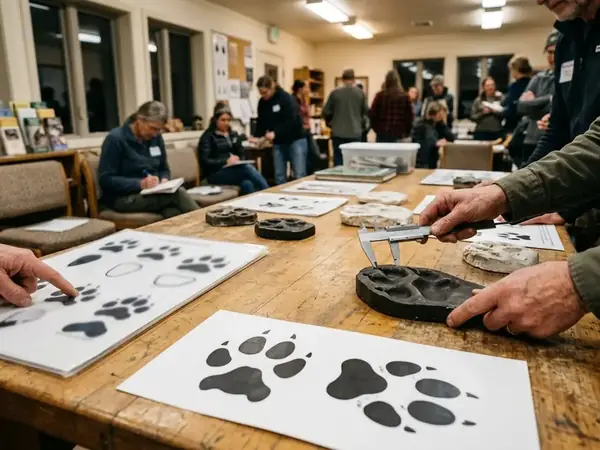
Field verification now starts with evidence standards. Confirmable material can include scat, hair snagged on wire or vegetation, tissue, saliva on prey remains, verified tracks with scale, and trail-camera images with location and time metadata. The details are not bureaucratic clutter. They are what keep a restoration program from building policy on wishful thinking.
Caution: A single trail-camera image without scale, location metadata, or follow-up physical evidence can fail as proof even when the animal visually resembles a cougar.
That point frustrates people. I understand why. A clean-looking image feels persuasive. But a restoration model needs evidence that another biologist can audit, not just admire.
DNA analysis changed the evidentiary floor
DNA analysis has been used in cougar field verification since the 1990s, especially to confirm species identity and distinguish local ancestry from long-distance dispersal or captive-origin animals. That shift raised the quality of the conversation. It moved the work from “I saw something tawny near the treeline” to “this sample can be tested, logged, and compared against known lineages.”
The process is not glamorous. A field crew may collect scat with gloves, place hair in a clean envelope, record coordinates, photograph the context, and preserve the chain of custody for lab review. Done well, the work feels almost fussy. That fussiness is the point.
Drawing from field verification practice, DNA analysis is strongest when paired with physical context: a trackway, a prey carcass, a camera record, or a repeatable movement pattern. The genetic result answers one question. The landscape evidence answers another.
Resource Allocation and Conservation Outcomes
Conservation money should follow the evidence pipeline. Protect habitat first. Then fund the tools that can verify whether cougars are using it. Then invest in public education so residents report evidence responsibly instead of flooding agencies with blurry images and rumors.
That sequence is not tidy on a budget sheet, but it holds up in the field.
What the work actually buys
Typical operational needs are modest in appearance and serious in consequence: sterile swabs, sample envelopes, gloves, GPS-enabled field records, camera traps, evidence logs, and lab access through university wildlife biology departments or public research partners. None of these items restore a cougar population alone. Together, they create the proof system that keeps a restoration effort honest.
Habitat protection carries the heavier lift. Large forest blocks, riparian movement routes, road-crossing bottlenecks, and private lands that connect existing public conservation areas all need attention before any rewilding claim has weight. If those places vanish, no DNA kit can compensate.
Qualitative outcomes worth tracking
I would rather see a program report better evidence screening than make grand claims it cannot support. Improved tracking methodologies matter. So do stronger university-agency partnerships, better public reporting behavior, and a clearer separation between verified cougar records and misidentified bobcats, dogs, coyotes, or domestic cats.
These outcomes sound plain because field infrastructure is plain. A well-trained volunteer who knows how not to contaminate a sample can be more useful than a viral post. A university lab relationship built over multiple field seasons can carry more conservation value than a one-time publicity push.
Expert Tip: Build the evidence log before the first high-profile report arrives. Once public attention spikes, rushed collection procedures can damage the very sample that would have clarified the record.
There is a limit, and it deserves direct mention. DNA tracking is least reliable in highly fragmented suburban landscapes where samples face road dust, weathering, domestic-animal contamination, and repeated human disturbance before trained personnel can collect them. That does not make suburban records useless. It means they need stricter handling and more corroboration.
Strategic Recommendation for Habitat Restoration
The strategic choice should be made at the landscape scale: protect connected movement corridors before investing in isolated displays or fenced sanctuaries.
I do not treat those options as equal. A fenced sanctuary may educate visitors or shelter individual animals, but it does not restore the ecological role of Puma concolor. Cougars disperse by moving through real terrain. They need cover, prey, escape routes, and the ability to pass between habitat blocks without being forced into lethal conflict at every road or subdivision edge.
Corridors are not interchangeable lines on a map
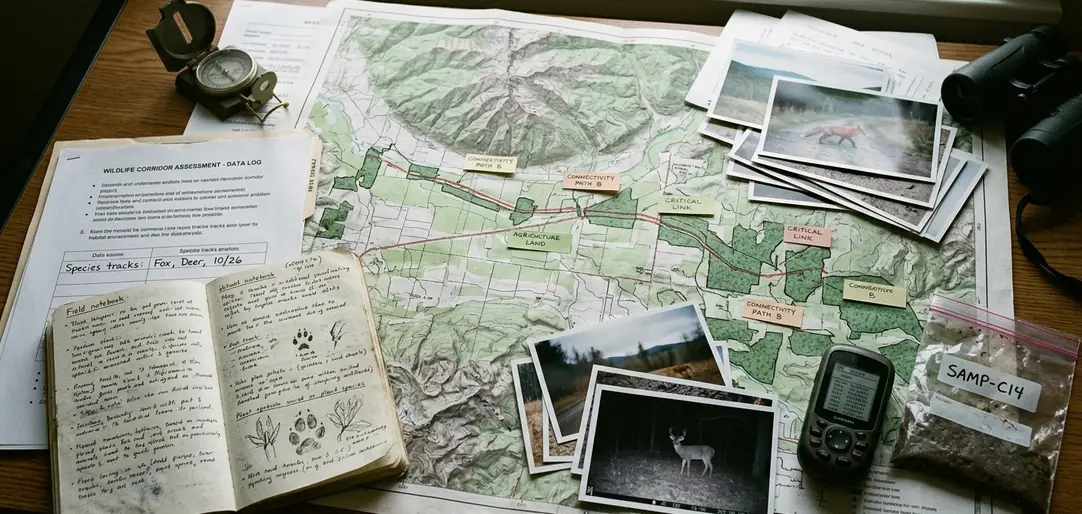
Corridor value changes by region: a forested ridgeline, a river corridor, and a suburban greenway may all connect habitat on a map, but they do not provide equal safety from roads, human conflict, or genetic isolation. The planning map has to meet the animal’s movement ecology, not the other way around.
This is also why Florida panther conservation experience cannot be copied directly into the Northeast or Appalachia. Prey base, road density, land ownership, public tolerance, and available contiguous habitat differ sharply. Lessons can travel. Templates should not.
What supporters should do now
- Back corridor-protection initiatives that secure large forest blocks and riparian movement routes.
- Support road-crossing work at bottlenecks where habitat is otherwise connected.
- Contribute verified field observations with location, time, scale, and physical context when appropriate.
- Allow noninvasive monitoring on suitable private land when trained researchers request access.
- Support research partnerships that can test habitat connectivity over multiple field seasons.
The eastern cougar conversation needs passion, but passion has to be yoked to habitat. Without connected landscapes, natural dispersal is ecologically impossible. My recommendation is blunt: put conservation energy into corridor protection first, because every serious rewilding outcome depends on that ground being held open.