
Defining the Social Infrastructure for Carnivore Recovery
Large carnivores disappeared rapidly from the eastern seaboard because sustained human-wildlife conflict and agricultural protectionism made their presence intolerable. Habitat loss contributed, but conflict drove the eradication campaign.
That history changes the order of operations for eastern cougar recovery. Forest cover and prey density matter, yet biological readiness cannot carry a restoration proposal through its first livestock loss, disputed sighting, or cougar encounter near a subdivision. Social readiness has to come first.
What Coexistence Infrastructure Includes
Coexistence infrastructure is the set of legal, social, and practical systems that prevents predictable conflicts before a cougar enters the recovery area. It includes dispatch protocols, livestock protections, evidence standards, compensation rules, municipal education, trained responders, and clear agency authority.
I start a readiness review by separating continuous forest from functional habitat. The second measure adds road mortality risk, residential density, livestock exposure, and secure movement routes to maps of prey and cover. A county may retain extensive forest while remaining operationally unprepared: dispatchers may lack a cougar call category, officers may have no evidence protocol, and farmers may be unable to obtain prevention assistance before a loss.
The legal review should answer four questions before a release proposal advances:
- Which agency investigates a reported sighting?
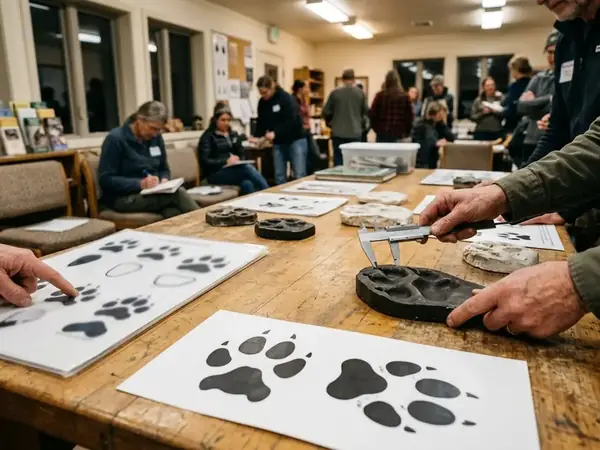
- Who collects tracks, hair, scat, photographs, and other biological evidence for field examination or DNA analysis?
- Who may authorize hazing, immobilization, or capture?
- Who holds authority for a lethal-control decision?
The Readiness Test
If local officials cannot assign each decision to a named office, the landscape still lacks essential coexistence infrastructure.
Securing Agricultural Livelihoods Through Proactive Measures
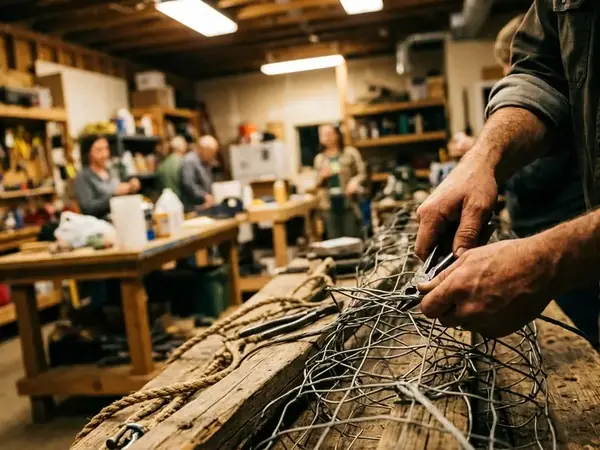
Agricultural safeguards need parcel-level design. Field staff should document calving and lambing sites, wooded approaches, enclosure gates, carcass-disposal practices, and the locations where livestock become difficult to monitor.
Terrain and husbandry determine the useful mix. An electrified night enclosure may fit a compact sheep operation. Dispersed cattle in wooded pasture call for carcass management, targeted monitoring, changes around calving areas, and rapid response at likely approach routes. Reinforced fencing, fladry, and livestock guardian animals can form part of the baseline, with selection guided by the conditions on each farm. Official non-lethal wildlife damage management guidelines can support that planning.
Build Prevention Around the Livestock Calendar
Birthing periods require the tightest routine. Newborn animals and afterbirth can concentrate attractants, so active deterrent lines and enclosure gates should receive daily inspection during those periods. Carcass handling also belongs in the prevention plan rather than in a response written after repeated losses.
- Map birthing areas and wooded approaches.
- Select deterrents for the livestock species, terrain, and daily husbandry routine.
- Assign responsibility for gate, fence, and fladry inspections.
- Establish an immediate depredation-reporting channel.
- Adopt and fund compensation rules before cougars enter the recovery area.
When a suspected depredation occurs, preserve the scene. Leave the carcass, tracks, hair, scat, drag marks, and nearby ground undisturbed until an authorized state wildlife officer completes the field examination.
Compensation provides a necessary foundation for trust, though its limits should appear plainly in the policy. Payment commonly requires forensic confirmation and covers baseline market value. That calculation can leave the pedigree, reproductive potential, and years of selection represented by breeding stock uncompensated. Farmers need to know those terms before they are asked to support recovery.
Developing Municipal Safety and Education Protocols
Public education works best when it prepares residents for decisions they may actually face. Materials should distinguish an unverified report from a documented sighting, repeated use of a residential edge, defensive behavior, stalking behavior, and an immediate emergency.
An ambiguous trail-camera image can consume responder time and amplify fear. Verification standards should require the original file, location context, scale, and corroborating field evidence before officials describe a report as confirmed.
Create One Sighting Response Tree
Residents need a simple route for reporting encounters. A standardized form should record the time, precise location, direction of travel, estimated distance, observed behavior, track dimensions, and camera metadata. It should also ask whether pets, livestock, food, or a carcass were present.
The response tree then separates urgent events from evidence that can enter a wildlife-agency verification queue. An attack, stalking behavior, or a cougar confined in a populated space should go immediately to emergency dispatch. Non-urgent photographs and tracks follow the verification process without tying up emergency lines.
Confirm Before Broadcasting
Municipal updates should label evidence as confirmed or pending. Early precision prevents rumor from becoming the public account of an incident.
Planning boards have a separate preventive role. Corridor review should happen while parcel layouts, road access, lighting, and open-space connections can still change. At that stage, boards can direct secure movement routes away from high-density neighborhoods. Waiting until subdivision approval leaves fewer practical choices and can place homes directly against a predictable travel path.
Training Specialized Local Response Networks
The first cougar incident will test the chain of authority as much as the field skills of individual officers. A fast, professional response protects residents, preserves evidence, and limits the chance that early conflict erodes support for recovery.

Assign Authority Before the Call
State biologists and municipal responders should adopt a written incident matrix. It needs to specify who verifies evidence, controls the scene, communicates with residents, performs aversive conditioning, coordinates capture, and authorizes any escalation. Jurisdictional boundaries deserve explicit treatment because a mobile carnivore can cross a town or county line during a single incident.
Local animal-control and wildlife officers also need access to non-lethal intervention tools and specialized large-carnivore training. Equipment alone will not settle questions about scene control, animal behavior, public access, or immobilization. Those decisions require practiced coordination.
- Maintain a continuously available state wildlife contact.
- Keep a current call-down list for dispatch, animal control, law enforcement, veterinary support, and a qualified immobilization team.
- Run at least one tabletop exercise and one field exercise each year.
- Include an exercise that crosses a municipal or county boundary.
- Give one designated spokesperson a verified incident log.
Exercises should force participants to make decisions with incomplete information. One team may receive a photograph while another secures possible tracks and a third manages bystanders. The incident log becomes the shared record, allowing the spokesperson to separate confirmed evidence from pending reports in every public update.
This preparation matters most during the first conflicts. Residents will judge the broader restoration effort through the visible conduct of local responders: whether calls reach the right office, scenes remain controlled, evidence survives, and officials communicate without speculation.
Initiating Local Wildlife Policy Audits
A policy audit turns coexistence from an aspiration into a list of accountable tasks. Begin with the county code, emergency-dispatch procedures, animal-control policies, agricultural zoning rules, subdivision standards, and the state wildlife agency’s carnivore authority.
Audit the Documents in 30 Days
Request the current predator-response guideline, dispatch decision tree, zoning map, comprehensive plan, livestock-loss policy, and animal-control training standard from the county and relevant municipalities. Compare those documents against the responsibilities identified in the earlier sections.
Flag any ordinance that treats every large-wildlife incident as an ordinary nuisance-animal call. Also flag missing authority for temporary road closure, crowd control, evidence protection, and non-lethal hazing. Agricultural provisions should identify who funds preventive deterrents and how farmers apply for support before a verified loss occurs.
- List each missing policy, authority, training requirement, and funding source.
- Assign every unresolved gap to the responsible public office.
- Place funding deficiencies into the next available public budget cycle.
- Resolve prevention and response gaps before petitioning state agencies for biological release dates.
Today, send the six-document request to your county clerk and municipal administrators, then schedule the completed predator-policy audit for review within 30 days.