The Burden of Physical Proof in Wildlife Biology
Thousands of reported eastern cougar sightings flood wildlife agencies every year. Yet, they yield almost zero verifiable proof. This disconnect stems from a complex intersection of human psychology, photographic limitations, and harsh environmental factors. In wildlife biology, extraordinary claims require rigorous, physical evidence. Investigators separate a report from evidence by moving through a strict hierarchy. We preserve the observer's original account first. Then we request the unedited image or video.
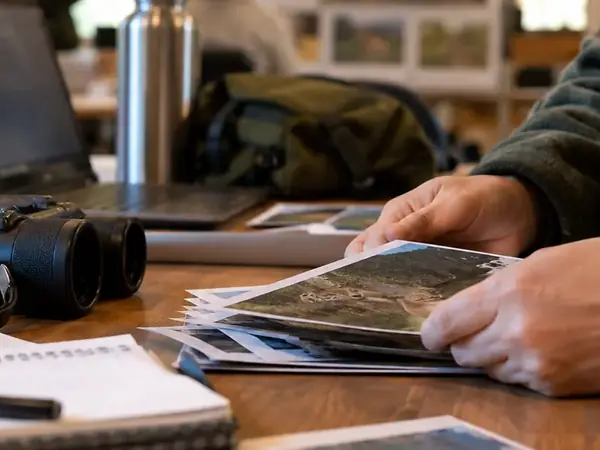
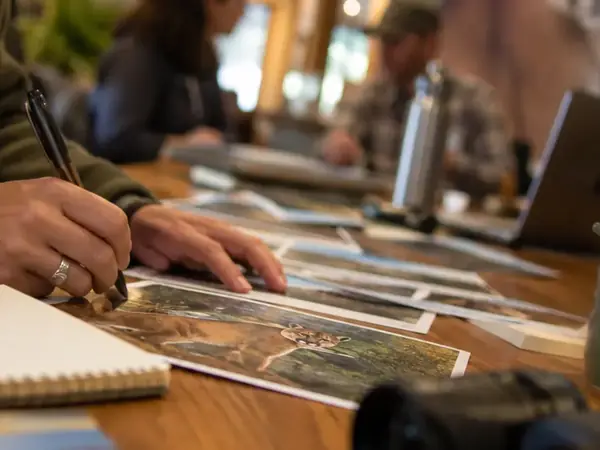
A useful photographic review requires the original file. Screenshots and social-media copies strip away capture time, device information, resolution, and location metadata. Next, we revisit the location for scale photographs and search for tracks, hair, scat, prey remains, or a carcass. A distant tawny shape justifies fieldwork—confirmation requires independently examinable physical material.
Perishable sign is most informative when investigators reach the site within the same day to approximately 72 hours. We must arrive before rain, traffic, leaf fall, scavengers, or additional animal movement alter the scene. Each stage—the witness impression, the original file, the scene scale, the track sequence, and the physical sample—faces a different verification failure.
Preserving Metadata for DNA Analysis Context
Digital provenance is as fragile as physical evidence. Always secure the raw file directly from the device before compression algorithms destroy the embedded data.
How the Human Brain Processes Fleeting Encounters
The human brain rapidly processes fleeting visual information in low-light or high-stress situations. When observers expect or hope to see a cougar, they unconsciously map feline characteristics onto ambiguous shapes. Eyewitness accounts are valuable for defining where cameras and track searches should begin. Memory alone cannot establish species identity or demonstrate a resident cougar population. The mind fills in gaps with anticipated details, turning a brief glimpse of a tawny flank into a fully formed predator.
To manage this psychological factor, the interview is conducted before showing the observer comparison photographs. Investigators ask for specific details:
- The sequence of movement
- The viewing angle and distance markers
- The tail position and ear outline
- The exact moment the animal disappeared
Only afterward do we compare the description with local species. This order reduces the chance that a bobcat, coyote, dog, or domestic-cat image will be incorporated into the witness's recollection.
A sighting form records start and end points, direction of travel, estimated viewing duration, light source, weather, intervening vegetation, and a fixed object that can later be measured for scale. Witnesses sketch the animal before discussing species. We pay particular attention to whether the tail reached near the ground, whether the ears appeared rounded or pointed, and whether the animal bounded, trotted, or moved with a low feline walk.
Technical Limits of Trail Cameras and Smartphones
Photo verification begins at the camera position. The reviewer identifies the lens height and direction, places marked stakes at the suspected animal path, and takes comparison frames under similar light. That scene reconstruction distinguishes a domestic cat passing close to a wide-angle trail camera from a cougar farther downslope.
A camera mounted low on a sloping trail exaggerates apparent shoulder height. An animal crossing within a few body lengths of the lens occupies more of the frame than a much larger animal farther away. Defensible follow-up work uses a ruler, marked pole, or person photographed on the same travel line. Measuring an object elsewhere in the frame fails to correct for forced perspective. The spatial relationship between the lens and the subject dictates the perceived size.
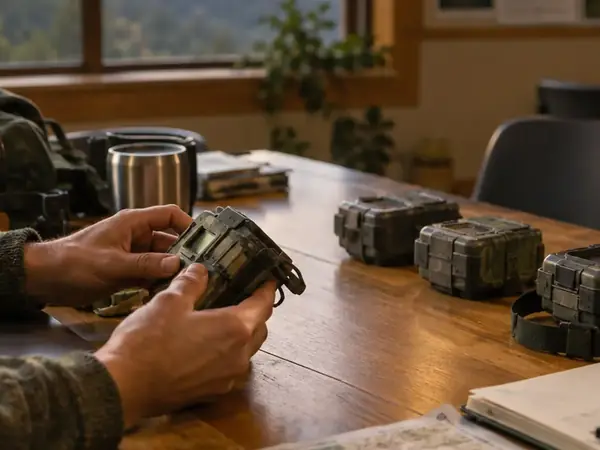
Reviewers then inspect consecutive frames. Near-infrared trail-camera images are usually monochrome. Close subjects reflect enough illumination to lose subtle spots, brindling, or color boundaries, especially when the background remains dark. Motion blur is strongest when an animal crosses laterally in dim conditions. A blurred tail merges with vegetation or the torso, and pointed ears soften into a rounded outline. An ambiguous tawny silhouette can identify a search corridor. It cannot cross into proof of an eastern cougar population without recoverable anatomy, provenance, or DNA analysis.
Correcting for Forced Perspective
Reconstructing the exact camera angle with a known scale on the precise travel path is essential. Relying on background objects for size estimation introduces severe distortion.
Anatomical Overlap Among Common Predators
Field identification proceeds by testing several anatomical traits together. A bobcat shows a short tail and proportionally long hind legs. A domestic cat possesses a long tail but lacks the cougar's heavy forequarters and large feet. Coyotes and dogs show a narrower chest, longer muzzle, and different gait. Yellow retrievers appear tawny and low-headed in blurred images.
Sarcoptic mange removes much of a coyote's body and tail hair. This exposes gray-tan skin and produces a thin, ratlike tail. The resulting silhouette looks unfamiliar. It lacks the muscular, evenly furred tail expected on a healthy cougar.
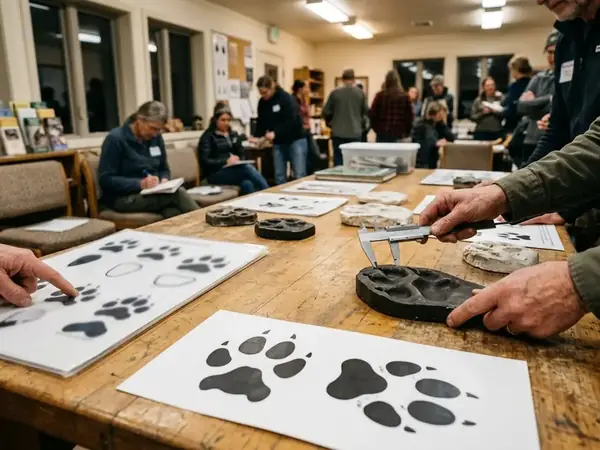
Canine tracks commonly register claws and form a more oval, symmetrical print. Feline tracks are usually broader and show a heel pad with a different lobe pattern. Soft soil and leaf litter erase those distinctions. During double registration, a canine hind foot lands partly over the front print. The overlap enlarges the mark and creates an apparently broad track unless the observer follows the trail far enough to examine stride, track repetition, and separate prints. A single isolated print rarely provides enough context for a definitive identification. For those interested in identifying cougar tracks and signs, examining the full sequence is essential.
Environmental Degradation of Physical Evidence
Search teams start at the reported crossing and work outward along travel funnels. We check logging roads, creek margins, saddles, game trails, and the edges of dense cover. We photograph impressions before touching them, place a scale in the same plane, and inspect a sequence to gather context before casting any single depression.
Dry Appalachian leaf litter often collapses into an indistinct bowl, obscuring toe and heel-pad edges. Rocky slopes preserve no continuous track sequence at all. Rain flattens hair, dissolves the surface of scat, moves loose hairs, and introduces environmental DNA. Heat, moisture, ultraviolet exposure, fungi, and bacteria further reduce the quantity and quality of recoverable genetic material. The eastern forest acts as a relentless filter, actively erasing the physical signs left by passing wildlife.
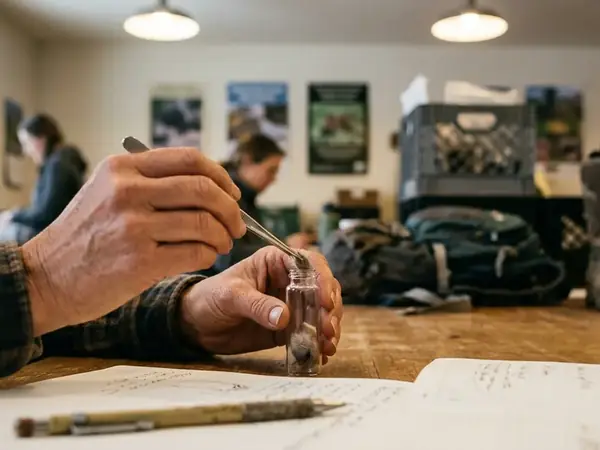
Potential hair and scat samples are handled separately with clean gloves and tools. We label them with collection time and coordinates, keep them dry or chilled according to laboratory instructions, and transfer them with a written custody record. A targeted camera survey keeps units active for in the range of 30 to 90 nights while checking batteries, vegetation growth, clock settings, and memory capacity on a documented schedule.
Securing Viable Genetic Material
Environmental factors rapidly degrade biological samples in eastern forests. Prompt collection and strict adherence to laboratory chilling protocols determine whether a sample yields usable results.
The Tactile Reality of Track Assessment
Early in the morning, a field biologist reaches a damp Appalachian trail identified in a high-confidence report. The observer points to a broad impression beneath wet oak leaves. Before disturbing it, the biologist photographs the mark from directly above, adds a scale, records its orientation, and searches ahead for the next impressions.
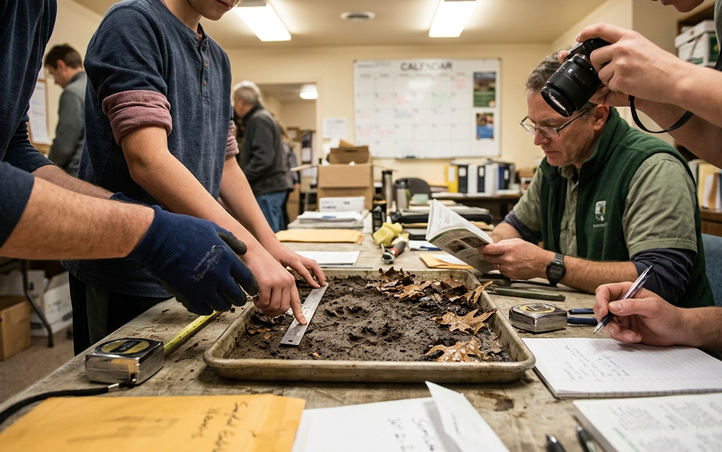
The verification kit includes a rigid scale, measuring tape, flagging, gloves, sample envelopes, a camera capable of close focus, and a field record for coordinates, substrate, weather, and track direction. Track length and width are measured at substrate level. Photographs are taken perpendicular to the print to avoid turning an oval impression into an apparently round one.
The team follows the trail for multiple steps because claw marks, pad shape, stride, and double registration become more reliable when they recur across a sequence. Kneeling in the litter, the biologist brushes away one leaf to reveal the faint, telltale claw marks of a large domestic dog.