From Historical Extirpation to Modern Vagrant Sightings
In June 2011, a vehicle struck and killed a young male cougar on the Wilbur Cross Parkway in Milford, Connecticut. When laboratory technicians ran a DNA analysis on tissue recovered from the carcass, the genetic markers traced the animal's ancestry back to the Black Hills region of South Dakota, roughly 1,500 miles away. Earlier field detections along its route had already tracked its multi-year eastward trek across the Upper Midwest. That single genetic match electrified the conservation community, proving that a solitary large carnivore could navigate half a continent of fragmented landscapes to reach the Atlantic coast.
Two centuries earlier, such a journey would have passed through occupied cougar territories the entire way. Following European settlement, systematic bounty hunting and widespread forest clearance eradicated the felid from its pre-colonial habitats across the Northeast and Midwest. Settlers cleared timber for agriculture and decimated white-tailed deer populations, collapsing the prey base while actively trapping and shooting every predator they encountered. As detailed in the U.S. Fish and Wildlife Service eastern cougar delisting documentation, the historic eastern subpopulations vanished entirely, leaving Florida to retain the only established breeding cougar population in the eastern United States—a population with a separate demographic history from the extirpated northern ranges.
Twentieth-century land abandonment triggered massive reforestation across the eastern seaboard, and regulated hunting allowed white-tailed deer to rebound to unprecedented densities. Structurally, the modern woodland ecosystem looks primed for apex predator restoration. However, wildlife biologists cannot count reforested land as interchangeable acres of potential cougar range without assessing it alongside deer availability, road exposure, settlement patterns, and connectivity to occupied source habitats. A rebounding prey base and dense canopy cover provide the metabolic fuel for a carnivore, yet those habitat ingredients alone cannot generate a population when the reproductive source remains over a thousand miles away.
To evaluate whether natural dispersal can ever restore the eastern cougar, we must break the apparent eastern return into four separate transitions: male arrival, female arrival, successful breeding, and recruitment into a persistent population. Confusing the first transition with the fourth leads advocates to celebrate isolated vagrant sightings as nascent population recovery.
Sex-Biased Dispersal and the Female Philopatry Bottleneck
Draw the recovery boundary around documented breeding females, not the outermost verified male photograph. In cougar population dynamics, the spatial distribution of reproductive females dictates the true frontier of expansion. While a succession of verified male records across the Great Plains and Midwest can make the breeding front appear much farther east than it actually is, those outliers represent a biological dead end until females occupy the same forested matrices.
Cougar dispersal generally occurs around independence from the mother, and the resulting movement patterns diverge sharply by sex. Subadult males face intense territorial aggression from dominant resident males. To avoid intraspecific strife and inbreeding, young males commonly leave their natal areas and undertake long-distance movements across non-forested agricultural expanses, rivers, and highway corridors in search of uncontested territories and mates.
Females exhibit strong philopatry. Rather than crossing vast open landscapes, young reproductive females typically settle near their mothers, establishing territories adjacent to or directly overlapping their natal home ranges. This conservative behavior produces a tightly clustered, slowly creeping breeding front. Occasional long-distance female dispersal does occur, making the relevant ecological question its frequency and ultimate reproductive outcome. Because females rarely leapfrog hundreds of miles ahead of their maternal ranges, the transient males arriving in eastern forests encounter landscapes completely devoid of conspecific mates.
Genetic Assay Scope: Genetic sex determination and individual identification answer entirely different ecological questions from source-population assignment; wildlife laboratories require comprehensive comparative reference samples from known breeding populations to accurately assess where a dispersing carnivore originated.
When we evaluate recolonization from the distribution of breeding females outward, the demographic bottleneck becomes unmistakable. Repeated male arrivals are an expected mechanical feature of an expanding population's distant fringe. Without concurrent female immigration, a transient male roaming an eastern woodland contributes nothing to long-term genetic flow or local recruitment.
Anthropogenic Mortality Sinks and the Allee Effect
Between the western source populations of the Black Hills or the Nebraska Pine Ridge and the continuous forests of the Appalachian Mountains lies a gauntlet of human infrastructure. We must assess any potential dispersal corridor as a strict sequence of survival and reproduction requirements: passage through open agricultural landscapes, crossings of major roads, survival near human settlements, and eventual access to a mate.
Agricultural regions vary widely in their permeability depending on riparian cover, waterways, settlement patterns, and road density. Even where forested river corridors offer cover across the plains, interstate highways create both direct collision exposure and severe movement barriers. As dispersing carnivores push eastward, mortality records accumulate from vehicle collisions, illegal killing, authorized agency removals, and accidental trapping. Field researchers must record the animal's sex and precise location for every mortality event, because losing a rare dispersing female carries vastly more severe implications for range colonization than losing another transient male.
In population ecology, a demonstrated demographic sink occurs where local deaths exceed local recruitment and long-term persistence depends entirely on continuous immigration. For animals that survive the infrastructural hazards to reach suitable eastern woodland, an invisible demographic barrier takes over: the Allee effect. At very low population densities, individual fitness and population growth rates plummet strictly due to mate scarcity.
Successful reproduction requires opposite-sex animals to occupy overlapping home ranges during a compatible reproductive period. When a single male and a hypothetical rare female disperse into millions of acres of eastern forest, the probability of their home ranges intersecting during estrus approaches zero. Sparse sightings across multi-state regions do not translate into viable encounter probabilities. Consequently, repeated male arrivals can coexist with a prolonged, multi-decade absence of recruitment. Comparing the projected time to breeding establishment and persistence under natural stepping-stone dispersal versus assisted recovery reveals that passive waiting is a consequential management choice that leaves eastern ecosystems without a top carnivore indefinitely.
Protocol for Evaluating a Confirmed Eastern Sighting
When a state wildlife agency authenticates a trail-camera image of an apparently young cougar in an eastern jurisdiction, conservation advocates must apply a rigorous analytical protocol before declaring a regional comeback. Follow these two operational steps to classify the ecological significance of the detection.
Step 1: Verify the Biological Profile via Field Genetics
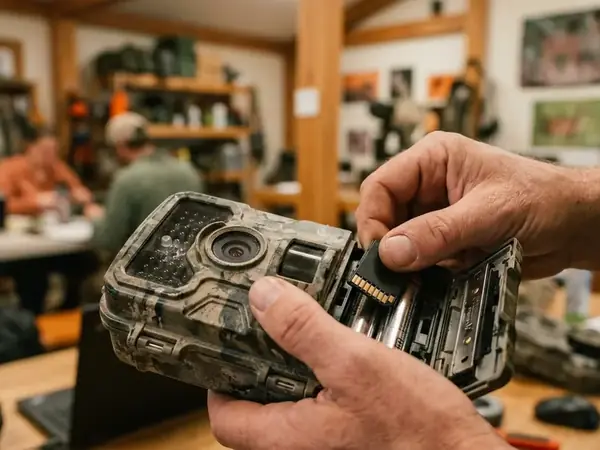
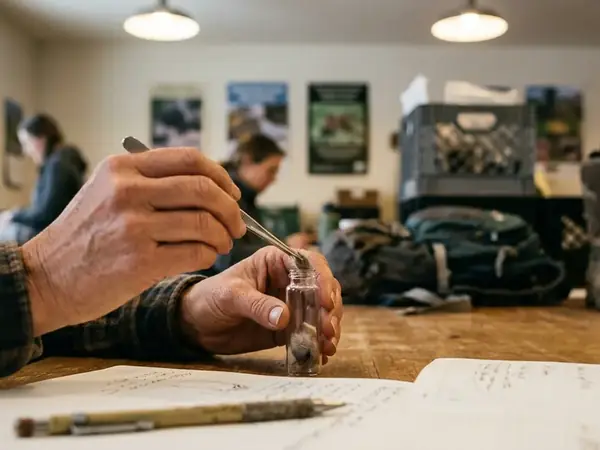
Establish the physical evidence chain immediately. Secure the original image file and exact coordinate record, deploy additional cameras to capture secondary detections, and coordinate with agency biologists to sweep the site for hair snags or scat. For each detection, log the date, coordinates, verification method, and individual genetic identification so that repeated records of the same animal remain linked rather than counted as separate cougars.
Run a formal DNA analysis on the collected biological material to determine sex, individual identity, and source ancestry. Microsatellite markers and single nucleotide polymorphism (SNP) panels will distinguish a South American captive escapee from a wild North American disperser matching western reference populations. However, keep the behavioral interpretation grounded: neither a single trail-camera photograph nor the genetic identification of a male establishes that the animal is transient, as verifying residency requires movement evidence over time, and a lone male can occupy a stable home range for years without ever breeding.
Step 2: Map the Nearest Female Breeding Boundary
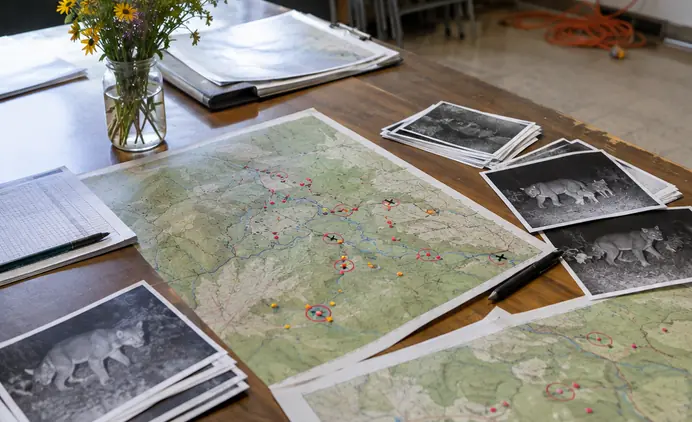
Plot the verified detection coordinates against current continental demographic maps. Measure the linear and corridor-routed distance from the eastern detection to the nearest documented breeding females, rather than measuring to the nearest verified cougar sighting. If the closest maternal home ranges sit on the western side of the Mississippi River basin, natural mate-finding in the immediate eastern watershed is biologically implausible.
Look for definitive reproductive markers within the local landscape. A verified observation of a female with dependent kittens provides direct evidence of reproduction. Evidence of genuine population establishment becomes progressively stronger only when multi-year monitoring documents continued female occupancy, additional litters, and survival of those offspring to reproductive recruitment. For example, a verified male mapped hundreds of miles ahead of the female philopatry front documents male arrival, not population establishment. A translocation feasibility study for that landscape would compare natural dispersal with assisted recovery, evaluating the likelihood of establishing a self-sustaining breeding population, projected establishment timeframes, expected corridor mortality, and the genetic monitoring required to verify long-term persistence.